

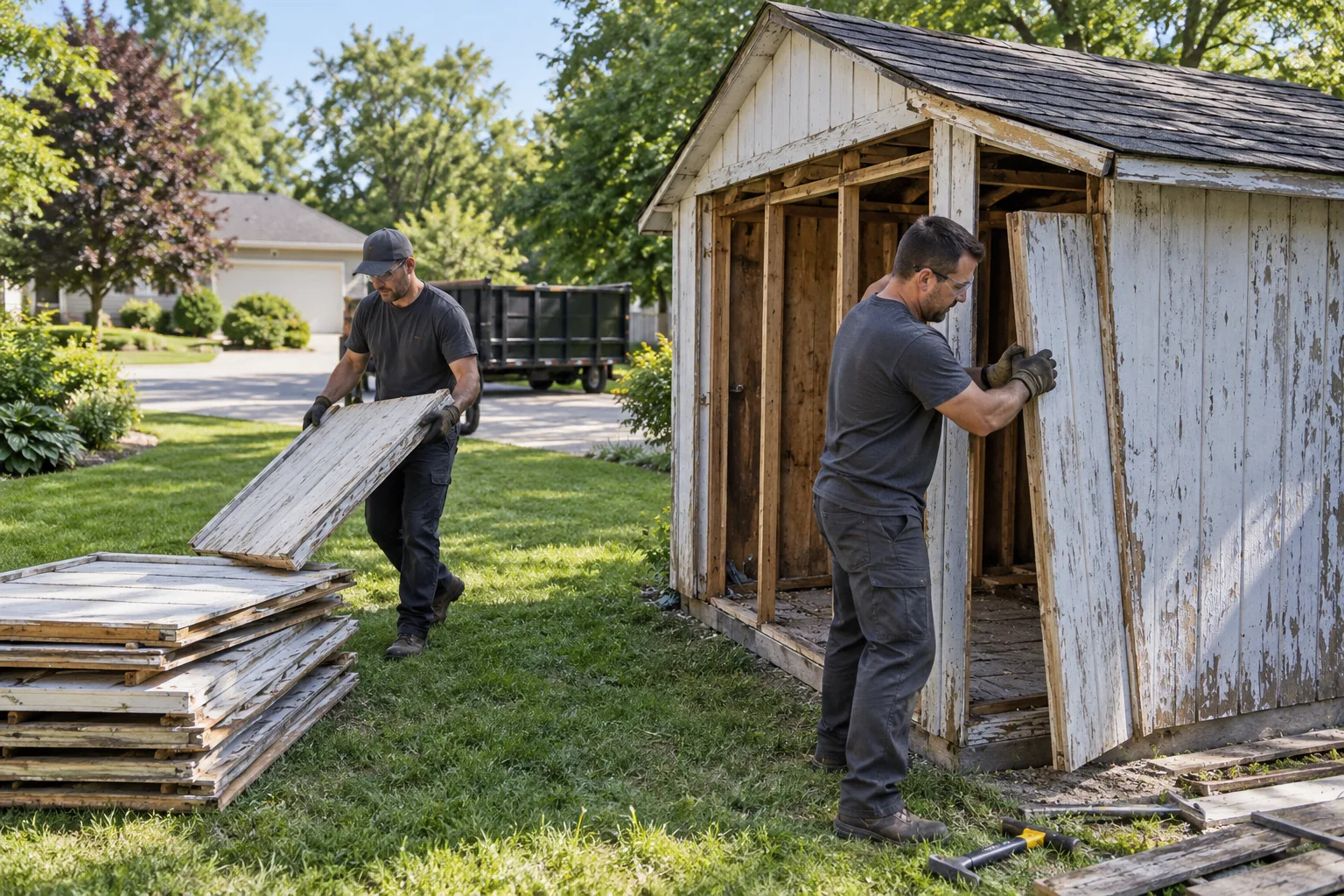
Draw one route, not two separate jobs
Stand at the hot tub and walk the route to the driveway. Note the narrowest gate, sharpest turn, stairs, soft ground, low branches, and any shed wall that limits the path. Then do the same from the shed. A shared route plan reveals whether one structure blocks the other.
Keep the loading area clear enough for sorted material. Hot tub panels, insulation, shed boards, roofing, and hardware should not become one mixed pile in the only usable walkway.
Empty and identify before dismantling
Photograph every shed item that is expected to leave. Fuel, paint, chemicals, batteries, and unknown liquids need separate handling and should not be buried inside a general removal estimate.
For the hot tub, confirm that water is out and utilities are safely disconnected. For the shed, identify wiring, anchors, slab edges, and buried posts.
Choose the sequence
Remove the shed first when it blocks the only practical path or provides needed staging space. Remove the hot tub first when dismantling it is the cleaner way to open the yard and the shed can remain safely out of the work zone. When neither blocks the other, sequence by weather exposure and material containment.
Write the boundary down
List the tub, cover, steps, shed contents, shed shell, roof, shelves, anchors, slab, and loose debris separately. This makes it easier to compare estimates and prevents a foundation or forgotten contents from appearing as an unexpected addition on removal day.
| Check | Record |
|---|---|
| Access | Narrowest width, turns, stairs, slope |
| Utilities | What is connected and who disconnects it |
| Foundations | Slab, skids, anchors, or buried posts |
| Staging | Where sorted material can sit safely |
| Restoration | What remains after haul-away |
Turn the checklist into an estimate.
Photograph the structure, the access route, and anything attached. Then call with the address and utility status.
Open the estimate checklist